Aligning promotional deal structures with taxonomy updates for regional gaming regulation feeds
Iris Simon · Jun 15, 2026
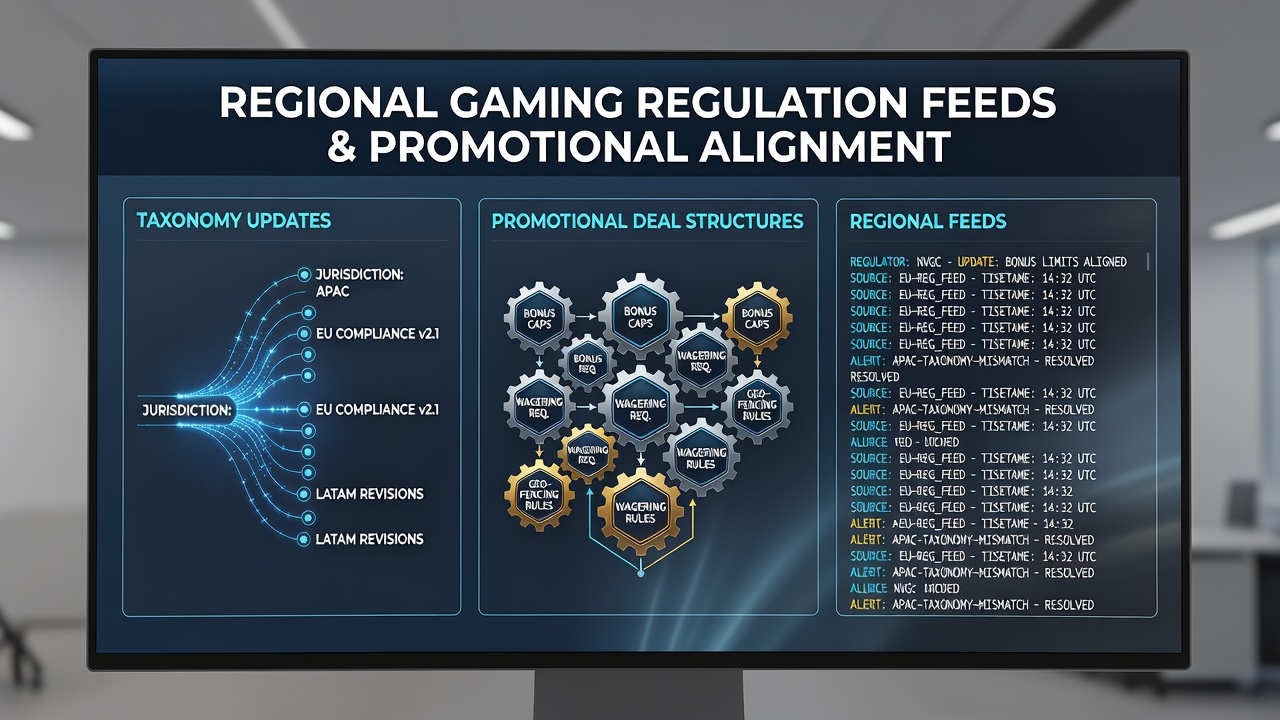
Aligning promotional deal structures with taxonomy updates for regional gaming regulation feeds
Digital gaming platforms organize promotional content through structured taxonomies that connect bonus categories to regional regulatory requirements, and these systems require regular alignment when oversight bodies revise their data standards. Operators maintain separate feeds for different jurisdictions because each region applies distinct rules to how promotions get classified, disclosed, and distributed.
Taxonomy frameworks in regulatory data systems
Regional authorities publish structured data feeds that categorize gaming activities, including promotional offers, under standardized terms that platforms must mirror in their internal content management systems. These taxonomies define fields for bonus types, eligibility criteria, wagering requirements, and expiration parameters so compliance teams can map offers directly to regulatory labels without manual reinterpretation. When a jurisdiction updates its classification scheme, sites adjust their WordPress term hierarchies and custom post metadata to keep promotional archives synchronized with the incoming feed specifications.
Researchers tracking content management practices across multiple markets note that mismatches between internal taxonomies and external regulation feeds often surface during audit cycles. Platforms that maintain version-controlled term lists reduce the frequency of these discrepancies because they can roll back or apply incremental patches when a feed revision arrives.
Promotional deal structures and classification needs
Promotional structures typically break down into welcome packages, reload incentives, cashback tiers, and loyalty rewards, each carrying specific attributes that regional rules treat differently. A single bonus might require distinct labeling depending on whether it targets new registrants or existing account holders, and taxonomy updates frequently introduce new subcategories to capture these distinctions. Operators therefore embed conditional logic in their content workflows so that a change in one region’s feed triggers targeted updates rather than global rewrites.
Integration methods for live regulatory feeds
Many platforms connect their taxonomy management tools to regulatory endpoints through scheduled API pulls that import updated classification schemas on a weekly or monthly cadence. Automated scripts then compare incoming terms against existing WordPress taxonomies and flag any new or retired labels for review. This approach allows editorial teams to focus on content accuracy while the system handles structural synchronization.
According to figures released by the Nevada Gaming Control Board, operators submitting promotional data through standardized feeds experienced a measurable drop in compliance queries during the first half of 2026. Similar patterns appear in reports covering other North American markets where taxonomy alignment protocols have been adopted.

Developments observed in June 2026
June 2026 brought several taxonomy revisions across multiple regulatory feeds, particularly in categories covering time-limited deposit matches and progressive jackpot contributions. Platforms that had already established mapping tables between their internal terms and the common regulatory vocabulary completed the transition within scheduled maintenance windows. Those without prebuilt mappings encountered additional review steps before promotional content could be republished under the new labels.
Industry observers point to coordinated efforts between platform developers and regulatory data teams as the main driver behind smoother transitions this year. These collaborations produced shared documentation that outlined exact term equivalencies, reducing the interpretive burden on individual operators.
Practical workflow adjustments
Content teams implement change logs that record every taxonomy modification alongside the corresponding feed version number, creating an audit trail that regulators can reference during inspections. They also schedule periodic validation runs that test whether promotional pages still resolve correctly under updated category paths. When a regional authority adds a new disclosure requirement, teams insert the relevant metadata fields into existing term structures instead of creating duplicate categories that could fragment search results or archive navigation.
Turnkey solutions now include plugins that listen for feed updates and surface suggested term merges or splits directly inside the WordPress admin interface. These tools reduce the manual effort required to keep promotional deal structures aligned with evolving regulatory definitions across different jurisdictions.
Conclusion
Effective alignment between promotional deal structures and taxonomy updates for regional gaming regulation feeds depends on maintaining synchronized classification systems, versioned mapping tables, and automated validation steps that accommodate periodic regulatory revisions. Platforms that treat taxonomy management as an ongoing operational process rather than a one-time configuration project demonstrate greater consistency when new feed specifications appear. Continued coordination between operators and regulatory data providers supports these alignment practices across expanding markets.