Bridging Catalog Management Systems with Engagement Analytics in Interactive Betting Environments
Ulrich Lehmann · Jul 17, 2026

Bridging Catalog Management Systems with Engagement Analytics in Interactive Betting Environments
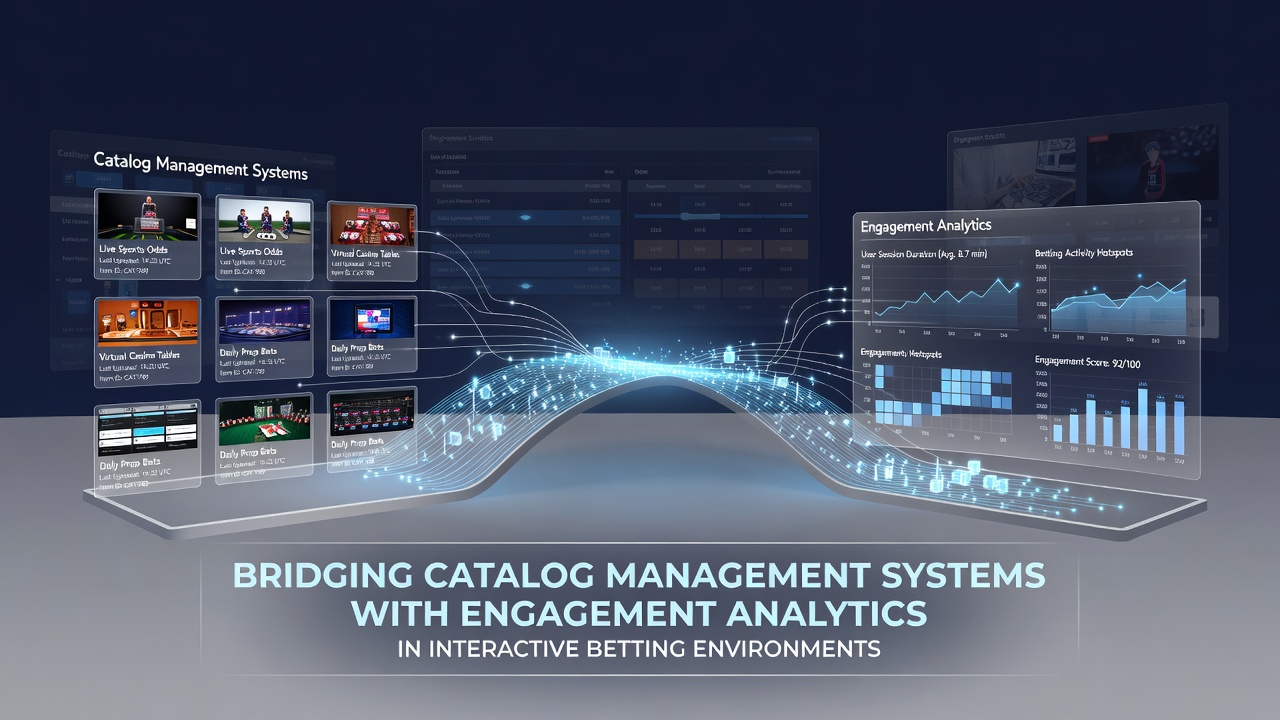
Interactive betting environments rely on catalog management systems to organize extensive libraries of games, odds, and promotional content while engagement analytics track user interactions across platforms; these two components connect through data pipelines that allow operators to adjust offerings based on real-time behavior patterns. Operators in regions such as Nevada and Ontario have implemented shared databases since the early 2020s, and by July 2026 updated protocols further synchronized inventory updates with session metrics from mobile and desktop users.
Catalog Management Foundations in Betting Platforms
Catalog management systems handle the structured storage of betting options including sports markets, casino titles, and live event feeds, while maintaining version control for regulatory compliance and content freshness. These systems use hierarchical taxonomies to group volatility levels, payout structures, and jurisdictional availability rules, which enables rapid deployment of new titles without disrupting existing user sessions. Data from the Nevada Gaming Control Board shows that major platforms processed over 2.4 million catalog updates monthly in the first half of 2026, driven largely by seasonal sports calendars and live dealer expansions.
Engagement Analytics as a Decision Layer
Engagement analytics collect granular signals such as click-through rates on specific game categories, average session duration per market type, and churn indicators tied to payout frequency. These metrics feed into dashboards that highlight correlations between catalog positioning and player retention, allowing teams to identify which table game previews or slot volatility indexes generate sustained activity. Research from the Ontario Lottery and Gaming Corporation indicates that platforms integrating session heatmaps with catalog metadata recorded a 17 percent increase in repeat deposits during Q2 2026 compared with non-integrated environments.
Integration Mechanisms and Data Flows
Bridging occurs through API endpoints and event streaming services that push catalog changes directly into analytics engines while pulling behavioral flags back to inventory rules. A typical workflow begins when a new promotional bundle enters the catalog, triggers an automated tag for targeted user segments, and then monitors engagement lift within defined time windows. Industry reports note that standardized schemas such as those promoted by the International Gaming Standards Association reduce mapping errors during these handoffs, especially when operators manage multi-jurisdictional catalogs spanning North America and Australia.
One documented case involved a Canadian operator that linked catalog release schedules with real-time engagement scores, resulting in automated rotation of underperforming titles within 48 hours of deployment. The approach combined SQL-based inventory queries with machine learning models trained on historical play data, and it produced measurable shifts in average revenue per user across both sports and iGaming verticals.
Regulatory Context and July 2026 Developments
Regulatory bodies continue to require audit trails that connect catalog modifications to player protection metrics, and July 2026 saw additional guidance from Australian state regulators emphasizing transparent use of engagement data in responsible gambling interventions. Platforms must now log how catalog visibility adjustments influence exposure to high-volatility products, creating an extra layer of reporting that many operators satisfy by embedding analytics hooks directly into their management layers. Observers note that these requirements have accelerated adoption of unified data models across different regulatory zones.
Technical Challenges in Unified Environments
Latency remains a primary concern when catalog updates must propagate to analytics systems serving millions of concurrent sessions, and operators address this through edge caching combined with asynchronous event queues. Data privacy rules in multiple jurisdictions further complicate cross-border analytics sharing, prompting many firms to implement region-specific processing nodes that still feed aggregated insights into central dashboards. Studies published by the University of Nevada, Reno highlight that latency reductions below 200 milliseconds correlate with higher accuracy in predictive models that forecast catalog performance based on early engagement signals.
Operational Outcomes Observed Across Markets
Platforms that maintain tight coupling between catalog rules and engagement analytics report faster identification of emerging player preferences, such as increased interest in live dealer variants during evening hours in specific time zones. This linkage also supports dynamic pricing adjustments for odds and bonus structures, where engagement thresholds trigger catalog-level modifications without manual intervention. Figures released by the Canadian Gaming Association for early 2026 demonstrate that operators using these bridged systems achieved a 12 percent reduction in content maintenance hours while sustaining or improving key retention benchmarks.
Conclusion
Bridging catalog management systems with engagement analytics creates a closed feedback loop that keeps betting environments responsive to documented user patterns and regulatory expectations. As of July 2026, continued refinement of data exchange standards and privacy controls supports broader implementation across North American and Australian markets, with measurable effects on operational efficiency and compliance reporting. The technical foundation now in place allows future expansions in personalization and risk monitoring without requiring wholesale architectural changes.