Custom Taxonomies Bridge Volatility Ratings and Regional Licensing Updates in Gaming Databases
Iris Simon · Jun 24, 2026
Custom Taxonomies Bridge Volatility Ratings and Regional Licensing Updates in Gaming Databases
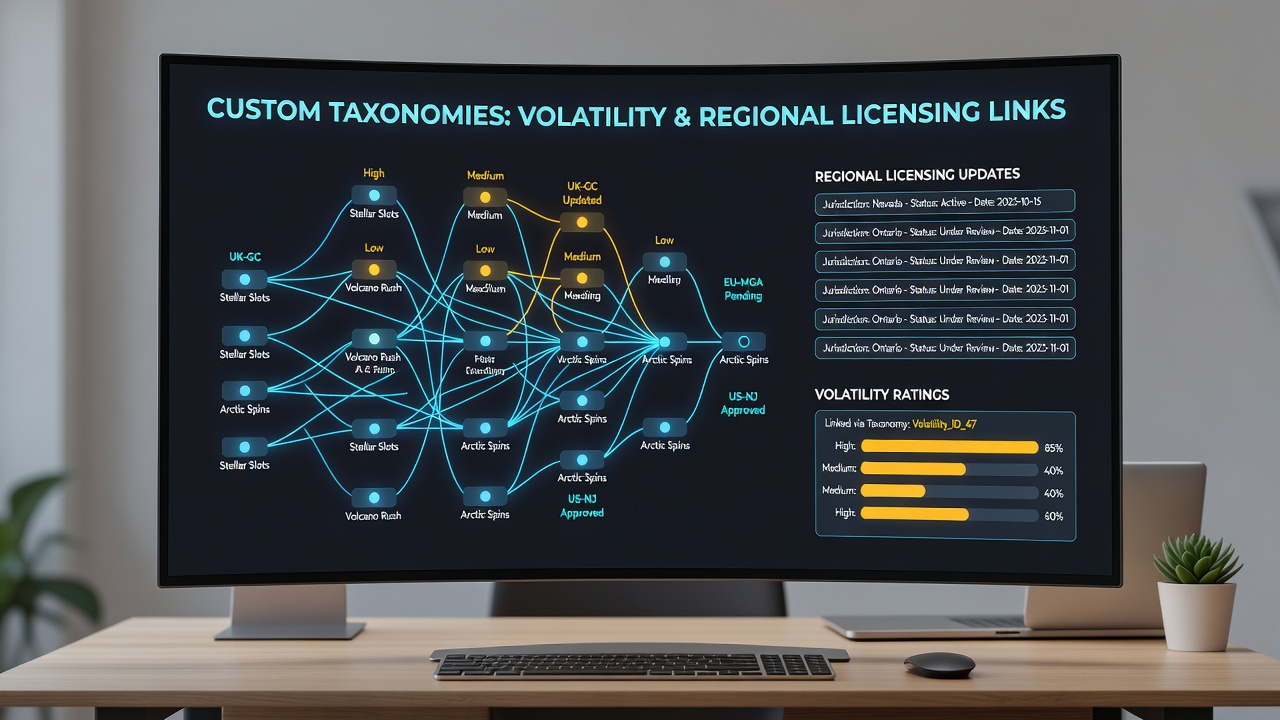
Gaming databases rely on structured classification systems to organize vast amounts of information about game mechanics and compliance requirements, and custom taxonomies provide the framework that connects these elements efficiently. Developers assign specific terms to content entries so volatility ratings, which measure the risk and payout frequency patterns in slots and table games, align directly with licensing data that varies by jurisdiction. This approach allows database queries to pull relevant records without manual cross-referencing each time regulations shift.
Defining Custom Taxonomies in Gaming Contexts
Custom taxonomies extend beyond standard categories by letting administrators create hierarchical or flat term sets tailored to industry needs, such as tagging games according to volatility levels that range from low to high based on standard deviation calculations derived from return-to-player data. Observers note that these taxonomies integrate with content management systems to tag entries automatically when new licensing documents arrive from regulatory sources. Researchers have documented how such systems reduce retrieval times for compliance teams who must verify that a particular game's volatility profile matches current regional rules before deployment.
Volatility Ratings and Their Data Structure
Volatility ratings categorize games by analyzing payout distribution patterns, where low-volatility titles deliver frequent smaller wins while high-volatility ones produce larger but less common payouts. Database architects embed these ratings as taxonomy terms linked to mathematical models that process historical spin data, and they update the terms whenever fresh performance statistics become available. Studies from academic gaming research centers show that precise volatility tagging improves recommendation engines because algorithms can filter results according to player preference profiles stored alongside the ratings.
Regional Licensing Updates as Dynamic Inputs
Licensing updates arrive from multiple authorities including the Nevada Gaming Control Board and the Victorian Commission for Gambling and Liquor Regulation, each issuing rule changes that affect game approval criteria. In June 2026 several jurisdictions released revised guidelines that required additional disclosure of volatility metrics within licensing submissions, prompting database managers to adjust taxonomy structures accordingly. These updates often include new restrictions on game features that influence volatility calculations, so the taxonomy terms must accommodate both existing and incoming regulatory language without creating duplicate entries.
Integration Methods Between Ratings and Licensing Data
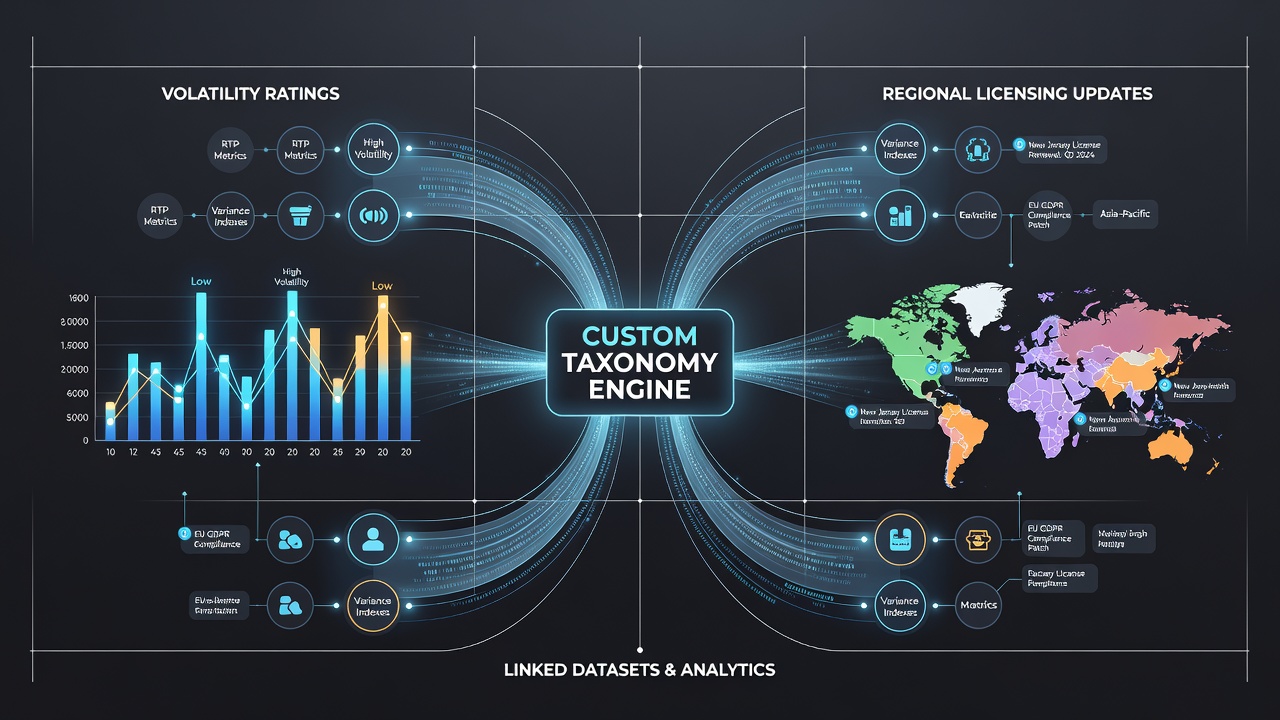
Linking occurs through relational fields that map each volatility term to specific licensing codes, allowing automated alerts when a regulatory body modifies its stance on acceptable risk parameters. Database engineers implement these connections using plugins or custom scripts that scan incoming feeds and apply matching taxonomy labels in real time. Those who maintain large catalogs report that this method prevents mismatches where a game approved under one set of volatility rules appears under an outdated licensing category after an update.
Implementation Steps for Database Administrators
Administrators begin by auditing existing game records to identify all volatility descriptors currently in use, then they create new taxonomy vocabularies that incorporate licensing jurisdiction codes as parent or child terms. Testing follows with sample queries that retrieve games meeting both volatility thresholds and active license conditions in targeted regions, while validation scripts check for broken links between the two data sets. Teams often run parallel environments during rollout so that live sites continue serving accurate information while refinements occur in staging areas.
Case Examples from Operational Systems
One large platform integrated volatility taxonomies with licensing feeds from multiple Canadian provinces and observed improved accuracy in displaying only compliant titles to users in each area. Another operation handling European markets adjusted its terms after a regulatory circular required clearer separation of medium-volatility games under updated approval processes, and the taxonomy update allowed quick reclassification without rebuilding the entire content structure. These adjustments demonstrate how the system scales when new regions enter teh database or when existing authorities revise their volatility disclosure rules.
Maintenance Considerations Over Time
Regular audits keep taxonomy terms aligned with evolving data sources because licensing bodies release amendments at varying intervals. Automated monitoring tools flag entries where volatility ratings no longer match the latest regulatory language, and manual review by compliance staff resolves edge cases that scripts cannot handle. Organizations track version histories of taxonomy changes so that historical records remain searchable even after terms receive updates for new licensing cycles.
Conclusion
Custom taxonomies serve as the connective tissue that keeps volatility ratings synchronized with regional licensing updates across gaming databases. The structured approach supports accurate content delivery, reduces compliance risks, and accommodates ongoing regulatory developments from authorities worldwide. Organizations that invest in these classification systems gain operational efficiency while maintaining the integrity of their game catalogs as requirements continue to evolve.