Mapping Custom Post Type Hierarchies to Regional Payout Thresholds in Regulated Wagering Databases
Mia Koch · Aug 19, 2026
Mapping Custom Post Type Hierarchies to Regional Payout Thresholds in Regulated Wagering Databases
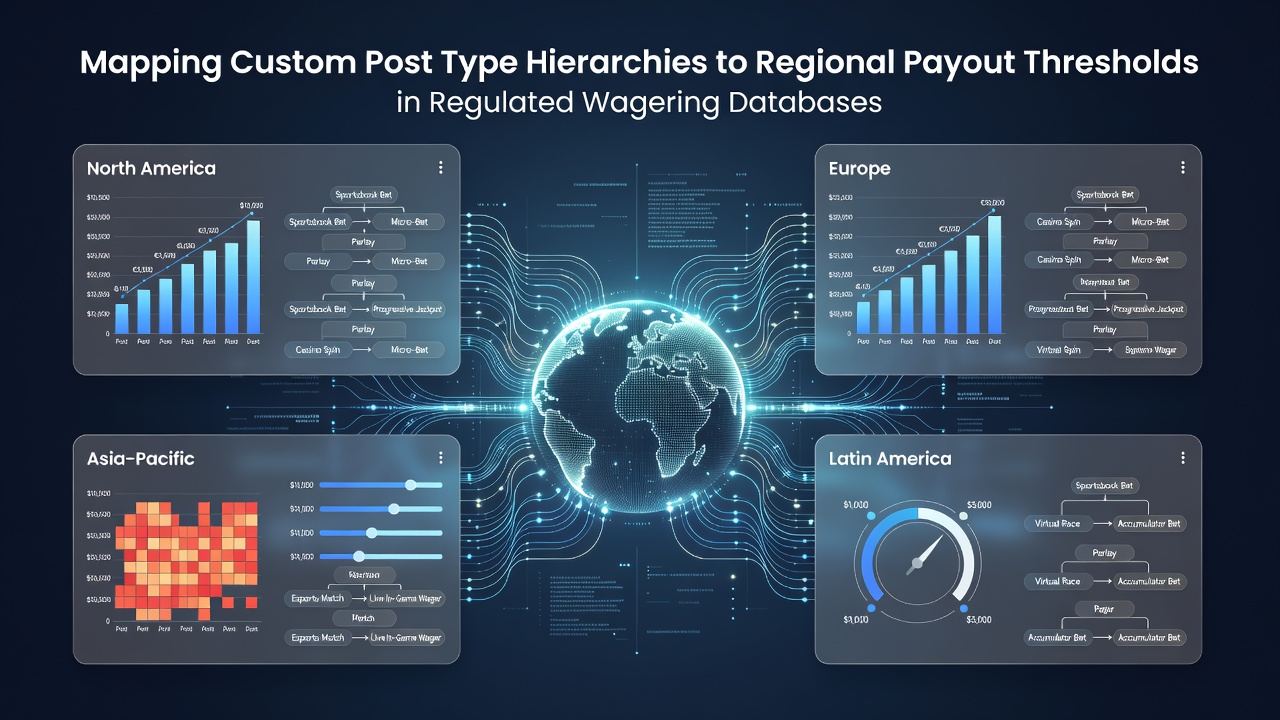
Regulated wagering databases rely on structured content models where custom post type hierarchies organize information about games, operators, and compliance rules, and these structures connect directly to payout thresholds that vary by jurisdiction. Developers build parent-child relationships in custom post types to represent categories such as game types or operator licenses, then map each level to specific payout limits defined in regional regulations. This approach allows systems to retrieve accurate financial parameters without manual lookups each time a query runs.
Core Components of Custom Post Type Hierarchies
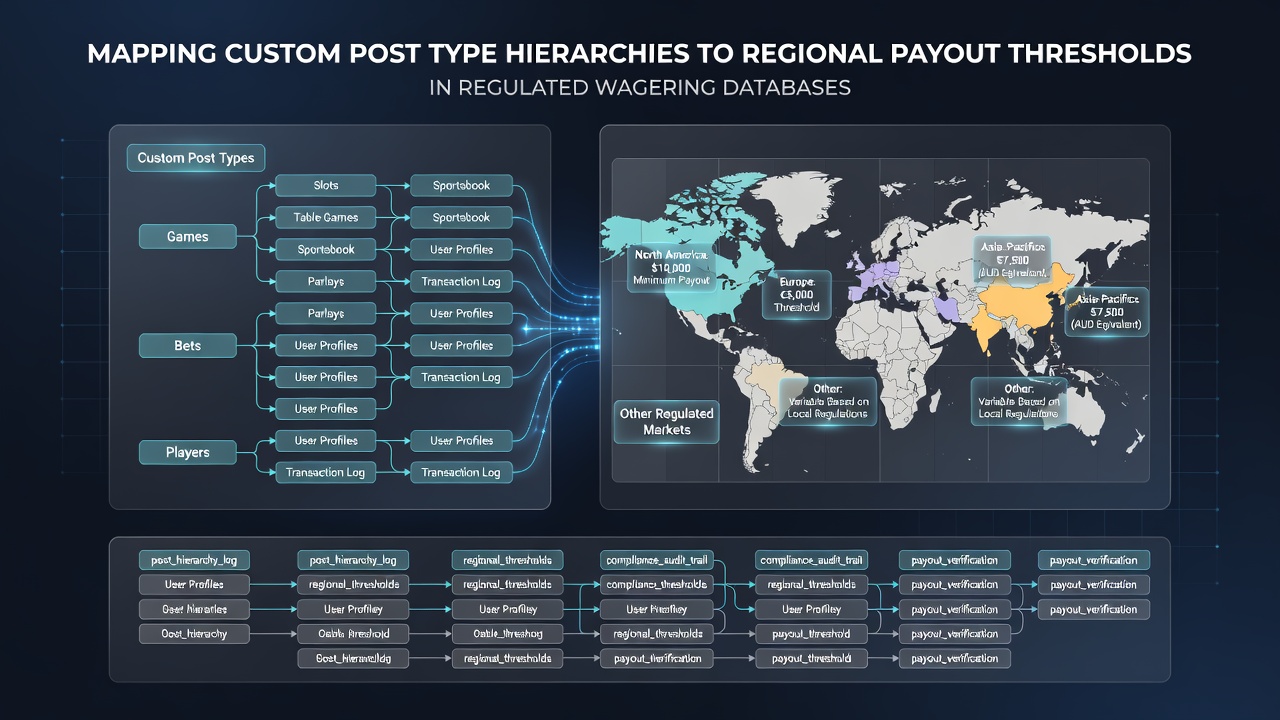
Custom post types in content management platforms extend beyond standard posts by allowing administrators to define fields for payout data, regulatory references, and geographic tags. A parent post type might cover broad categories like slot machines or table games while child posts store jurisdiction-specific details including minimum and maximum payout percentages. Observers note that such hierarchies reduce data duplication because changes at the parent level propagate through linked child entries when database triggers execute properly.
Developers assign meta fields to each custom post type entry so that regional payout thresholds appear as structured attributes rather than free-text notes. These fields pull from centralized tables that store regulatory updates, and automated scripts verify consistency across regions before any content publishes. Research from industry reports indicates that organizations maintaining these mappings report fewer compliance errors during audits compared with flat database designs.
Regional Payout Threshold Variations and Database Integration
Payout thresholds differ across regulatory environments because each authority sets its own rules based on local legislation and market conditions. In North American jurisdictions, for example, state-level gaming commissions publish updated percentage requirements that operators must reflect in their systems within specified timeframes. Similar patterns appear in European and Asian markets where national or provincial bodies issue quarterly adjustments tied to consumer protection standards.
Database architects link these thresholds to custom post type hierarchies through foreign key relationships that reference both the post ID and a region code. When a user query targets a specific location, the system joins the hierarchy table with the regulatory threshold table to return the correct payout range. This method supports real-time compliance checks because any regulatory change updates the threshold table once, and all associated post types reflect the new values automatically.
Implementation Practices Observed in August 2026
During August 2026 several operators completed migrations that aligned custom post type structures with refreshed regulatory datasets released by multiple authorities. These migrations involved scripting the population of new meta fields for each child post type while preserving existing parent relationships. Teams tested the mappings against sample queries that simulated player sessions from different regions to confirm that payout displays matched the latest published thresholds.
According to data published by the Nevada Gaming Control Board, updated slot machine payout parameters took effect mid-month, prompting organizations to verify that their hierarchy mappings pulled the correct figures without latency. Parallel updates occurred in other jurisdictions, and database logs showed that integrated systems handled the changes through single-table updates rather than widespread content revisions.
Benefits of Structured Mapping for Compliance and Reporting
Organizations that maintain clear mappings between custom post type hierarchies and regional payout thresholds gain efficiency during both routine reporting and regulatory audits. Reports generated from these systems aggregate data at the parent level while still respecting jurisdiction-specific limits stored at the child level. This separation supports granular analysis without exposing the full hierarchy to every query.
Studies conducted by research institutions on wagering platform architecture show that hierarchical models scale more effectively when new regions are added because developers create additional child post types rather than altering core database schemas. The same studies note that error rates in payout calculations decline when automated validation scripts compare stored thresholds against official regulatory feeds on a scheduled basis.
Conclusion
Mapping custom post type hierarchies to regional payout thresholds provides a systematic way for regulated wagering databases to maintain accuracy across multiple jurisdictions. The approach relies on well-defined parent-child relationships, structured meta fields, and reliable connections to official regulatory sources. Organizations continue to refine these mappings as new rules emerge, ensuring that content systems and financial parameters remain synchronized through established database practices.